
Jiu-Jitsu vs. Traditional Martial Arts — What’s the Difference?
If you’ve ever compared jiu-jitsu to arts like karate, taekwondo, or kung fu, you’ve probably noticed one big difference — jiu-jitsu spends most of its time on the ground.
But there’s more to it than that. Each style offers something valuable, depending on your goals.
Ground Control vs. Striking Power
Traditional martial arts like karate or taekwondo focus on striking — punches, kicks, and forms that emphasize distance and precision.
Brazilian Jiu-Jitsu (BJJ), on the other hand, is about grappling, control, and submission. It teaches how to neutralize an opponent using leverage and technique rather than brute force.
That’s why jiu-jitsu is often called “the gentle art.”
Strategy Over Strength
In jiu-jitsu, a smaller, weaker person can defeat a larger one through smart positioning and timing.
This makes it one of the most practical martial arts for real-world self-defense and personal confidence.
Belt Systems and Progress
Like many martial arts, BJJ uses a belt system — but it’s earned differently.
Progress is based on technique and understanding, not just time served.
That’s why each belt promotion in jiu-jitsu is deeply meaningful — it reflects real growth and problem-solving skills.
Practical Self-Defense
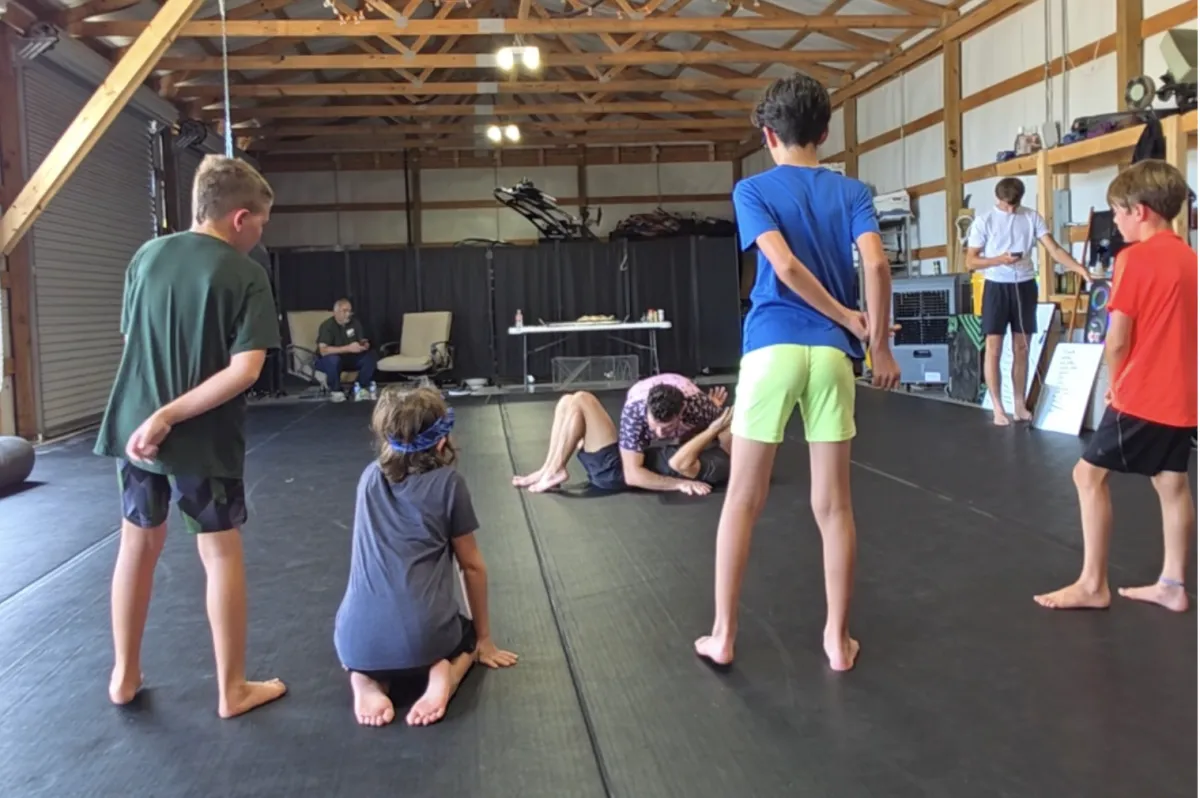
Unlike forms that focus on choreographed routines, jiu-jitsu applies techniques directly through live sparring.
That constant feedback loop makes it extremely effective under pressure.
It’s also why law enforcement and military professionals often train in jiu-jitsu — it teaches control and restraint without relying on strikes.
Which Style Is Right for You?
If you love high-energy kicks and striking combinations, traditional arts might fit you.
If you prefer ground control, strategy, and close-contact defense, jiu-jitsu will feel like home.
Either way, both styles build respect, confidence, and discipline.
Curious to see the difference yourself?
Schedule a free class and experience both striking and jiu-jitsu at The Ranch Martial Arts.